


Cold-Water Crankbait Fishing for Bass: Depth, Action and Retrieve
A useful cold-water crankbait reaches the water you need to fish and keeps working at a pace you can control. Start with depth and cover, then compare action, buoyancy and retrieve. Flat-sided baits are worth considering when a restrained, tight action fits the conditions, but cold water does not mean every bass is deep or that every retrieve must be as slow as possible.
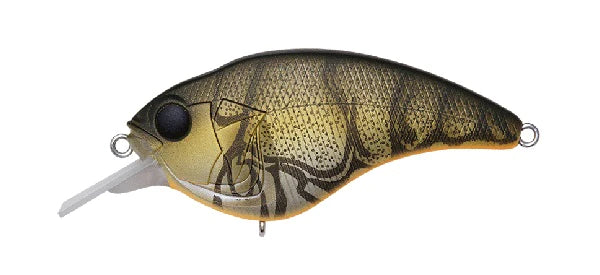
| Model example | Listed running depth | What to compare on the water |
|---|---|---|
| Megabass SonicSide | 6 ft | A silent, tight-action flat side for suitable hard cover and depth |
| Berkley Frittside 5 | 2-5 ft | A shallower route over or beside the target |
| Berkley Frittside 7 / 9 | 5-7 ft / 7-10 ft | A deeper route within the same family; check the exact model |
These are listed model ranges, not a promise of the depth reached on every cast. Line diameter, cast length, rod position and retrieve affect the working route.
Read the water before choosing the diving bill
Use the depth of the useful cover and the position of baitfish as your starting point. A rocky bank that falls quickly into deeper water offers a different route from a broad shallow flat. Consider where a cast will run after the bait reaches depth and where it will begin rising toward you. A long cast across an unproductive depth is still an unproductive cast.
In late fall and winter, the conditions in a sheltered pocket can differ from those on the main lake. Pay attention to actual water temperature, clarity, wind and recent changes rather than treating the month as a lure-selection rule. The same principles also apply during cold-water periods in early spring. Look for a workable combination of fish, forage and cover before assuming the whole lake needs one presentation.
Why a flat-sided crankbait belongs in the comparison
A flat-sided body is worth considering when you want a tighter action and a different flashing profile from a rounder-bodied crankbait. Megabass describes the SonicSide as a silent, floating flat side built around a tight, high-pitch action, with a listed depth of six feet. Its fixed internal weights and circuit-board lip are model features to compare with the casting and cover you intend to fish.
Berkley describes the Frittside family as having a flat-sided profile and tight action intended to be useful in tough or pressured conditions. The different model numbers change the available running depth. Choose among those models by the route you need to fish, then compare the action at your intended pace. A flat body alone does not tell you how every crankbait will swim.
Choose a depth that serves the target
If you intend to make occasional contact with a hard bottom, compare a bait whose working range can reach it during the useful part of the cast. If the objective is to run over submerged vegetation or above suspended fish, plan enough clearance to keep the hooks fishing cleanly. Continually digging into grass or wedging a bill between rocks is different from controlled contact.
The model table helps narrow the selection, but verify the result with the line and casting distance you actually use. A shorter cast gives a diving bait less distance to descend before it starts returning toward the rod. Moving the boat or changing your bank position can improve the route more effectively than repeatedly casting the same lure along an unsuitable angle.
Establish the action, then tune the retrieve
Begin with a steady retrieve slow enough to observe and feel what the bait is doing. It still needs enough movement to swim and reach the intended working water. If you slow down until the lure no longer performs the action you chose it for, compare a different model or presentation rather than assuming slower must be better.
Once you have a consistent baseline, test a pause, a brief change of pace or a controlled pull followed by slack recovery. Keep those changes purposeful. Rapala's cold-water guidance includes both tight-action baits and changes in speed or pauses to provoke a response. Compare what happens after an adjustment instead of settling on an unchanging handle rhythm simply because the water is cold.
Use contact as information
A change from a steady vibration to a light tick can tell you that the bait reached a rock, branch or bottom transition. Let that information guide the next movement. With a suitable floating lure, briefly easing forward pressure may let it rise or change direction around an obstruction. Test that behavior where you can see it before relying on it around valuable cover.
Avoid forcing the bait through every interruption. If it loads heavily or loses its normal vibration, check whether it has collected grass, rolled into a branch or lodged between rocks. A slower, more deliberate recovery can preserve the presentation and the lure. Occasional deflection can be useful; repeated fouling means the route or equipment needs adjustment.
Change casting angle before changing everything else
Work a bank at an angle that keeps the lure near the useful contour. Casting straight toward shore may take the bait through the target depth briefly, while a more parallel cast can keep it beside that depth for longer. On a point or isolated piece of cover, compare another approach when the first route produces contact or a follow without a bite.
Record the route that produced a response in practical terms: depth, cover, wind exposure and the point in the retrieve where it happened. That gives you something repeatable to look for elsewhere. One fish beside a rocky transition is a clue to investigate, rather than proof that every similar-looking bank will fish the same way.
Match line, rod and reel to the complete task
Choose a rod that comfortably casts the bait's actual weight and maintains controlled pressure on its treble hooks. SonicSide's listed weight is 1/2 ounce, while other model sizes can differ. Consider the resistance during the retrieve as well as the casting load. The Cashion rod guide explains why power, action and lure range should be read together.
Line diameter influences the finished presentation, so keep it consistent while testing depth or cadence. Fluorocarbon and nylon have different handling and stretch characteristics; use the bass-fishing line guide to compare them. With the reel, consider line pickup per turn and how comfortably you can sustain the intended pace. A particular gear ratio does not force you to retrieve at one speed.
Choose color after depth and action
Look at the forage and the amount of visibility available to the fish. Shad-style and craw-style finishes offer different starting points, while a higher-contrast finish can be worth testing when the bait is difficult to track. Water clarity and light conditions help organize the choice, but no color is automatically correct for every cold-water day.
Keep the running model and retrieve the same when comparing finishes. Moving to a deeper model, changing line and choosing another color together makes it hard to identify what helped. If a bait is traveling cleanly through the right area, a finish change is a reasonable controlled test. If it never reaches that area, solve the depth problem first.
Recognize when a different presentation fits better
A billed crankbait has a practical working range. If the fish are below it, hovering over deeper water or responding only to a much longer pause, choose another tool deliberately. A suspending jerkbait offers a different way to work the water column; the Vision 110 guide explains the model and depth choices. A bottom-oriented rig may fit a precise deeper target better than forcing a diving plug to reach it.
When fish are willing to feed at the surface, the walking-bait and popper guide provides the opposite comparison. Let the feeding level decide whether the lure belongs above, beside or below the fish. There is value in keeping a crankbait ready, but it earns its place through the route and response you can establish on that day.
Build a repeatable cold-water approach
Start with a known target depth, choose a model that can work there and make enough controlled casts to understand its route. Establish a clean swimming action, then test one adjustment at a time. Keep checking the bill, hooks and line after contact, particularly when the lure starts behaving differently from its earlier casts.
That process gives you a reason for every change. A SonicSide and selected Frittside models can cover different versions of the flat-sided presentation, but you do not need every depth or finish at once. Begin with the water you can fish effectively and expand the selection when another model fills a clear gap in the working range.
Compare current SonicSide options and Frittside sizes and colors, or browse the wider crankbait collection. Find the full tackle library in Gear Guides.
Manufacturer references: Megabass SonicSide model specifications; Megabass flat-sided crankbait guidance; Berkley Frittside design and model range; Rapala cold-water crankbait presentations