


Braid vs Fluorocarbon vs Monofilament for Bass Fishing
The best line for bass fishing depends on what the bait needs to do and what the complete setup must handle. Braid, fluorocarbon and nylon monofilament each solve different problems. Start with the presentation, cover and hook, then choose the diameter and strength that let you fish it effectively rather than looking for one material that wins every comparison.
| Line type | Where to start considering it | Tradeoff to account for |
|---|---|---|
| Braid | A thin mainline, line watching and direct contact; heavier versions for vegetation | Low stretch demands an appropriate drag and hookset; a leader adds a connection |
| Fluorocarbon | Subsurface presentations and a less conspicuous leader | It sinks and still stretches; thicker sizes can be less manageable on small spools |
| Nylon monofilament | Surface presentations, a forgiving setup and straightforward mainline use | Stretch and diameter can reduce direct feel at distance |
Let the lure’s job narrow the choice
Ask whether the bait should stay on top, travel through the water column or maintain contact with the bottom. Then consider how you will set its hook. A surface plug with small trebles and a weedless jig beside timber ask different things of the line, even when both target the same size bass. Choose for the task before choosing a brand.
Consider the rod and drag at the same time. A low-stretch mainline changes how abruptly force reaches the hook; a more forgiving line changes how much movement is needed to take up pressure. Neither property automatically fixes an unsuitable rod or a poorly set drag. Our bass-rod selection guide explains that part of the system.
Braid: thin diameter and direct contact
Braid offers high strength for a relatively small diameter and little stretch, making it worth considering when line handling and direct contact matter. It can serve as a spinning mainline with a separate leader, or as heavier straight braid for suitable vegetation presentations. The correct diameter still matters: the thinnest option is not automatically the easiest to manage on every reel.
With low-stretch line, control the force you apply to light hooks and leaders. Avoid carrying an aggressive hookset from one setup straight into a delicate finesse combination. Power Pro Spectra is one braided option to compare; select its actual size for the reel and technique rather than assuming a pound-test label translates directly from nylon.
Fluorocarbon: useful below the surface, with real tradeoffs
Fluorocarbon sinks and is less conspicuous underwater than ordinary nylon of comparable diameter. Those properties make it useful to consider for subsurface mainline and leader applications. It is not invisible, and it is not stretch-free. Seaguar explicitly notes that fluorocarbon stretches, with differences between its mainline and leader products.
Choose a product intended for the job. A full spool of mainline and a short length of dedicated leader material are different purchases, even when both say fluorocarbon. Compare handling and diameter as well as strength. Seaguar InvizX provides a mainline option to evaluate, while the fluorocarbon collection lets you compare the wider selection.
Nylon monofilament: useful forgiveness and surface behavior
Nylon mono remains a practical option when you want a straightforward mainline with some shock absorption. Compared with sinking fluorocarbon, its buoyancy makes it a sensible material to consider for many surface presentations. The extra give can also be useful in a setup built around exposed hooks, provided you can still apply adequate pressure at the distance you fish.
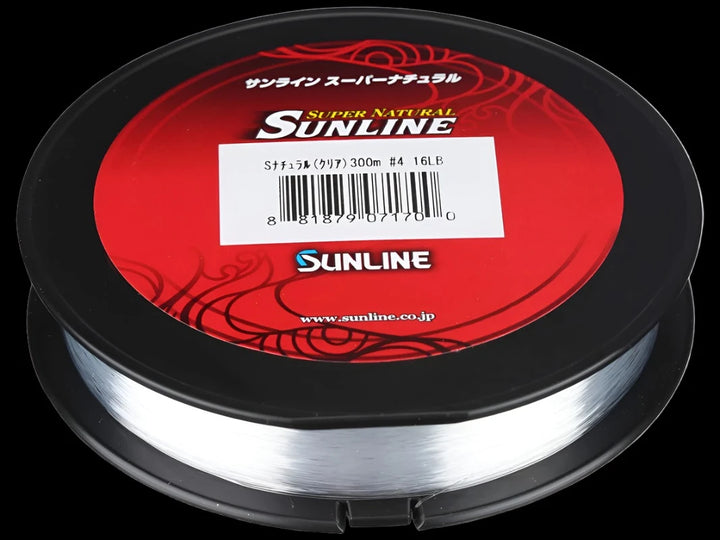
Nylon products differ in suppleness, diameter and stretch. Sunline describes Super Natural as a manageable nylon with moderate stretch, which makes it an example to compare rather than a reason to treat every mono as identical. Choose the breaking strain and diameter around the lure, cover and reel capacity, not simply the smallest spool price.
Finesse spinning: compare the whole line system
For a light drop shot, shaky head or small soft jerkbait, braid with a fluorocarbon leader lets you separate spool handling from the material nearest the lure. Straight fluorocarbon or nylon avoids the joining knot. The useful choice is the one that suits the presentation and that you can tie, cast and inspect reliably.
As an initial comparison for light, open-water bass rigs, consider 10-15-pound braid with a 6-10-pound leader, then check the exact diameters, rod rating and hook. These are starting ranges, not requirements or a promise that light line will cope with cover. Increase protection or change the setup when the conditions demand it. The spinning-reel size guide explains how the spool and intended line affect each other.
Jigs and moving baits need different balances
For bottom-contact jigs and Texas rigs, weigh direct feel against abrasion, cover and the force required to set the chosen hook. Fluorocarbon mainline and braid-based systems can each be useful, but a thin leader or overly forgiving rod may become the limiting part around heavy cover. Include the hook wire and complete rig in the decision.
With crankbaits, jerkbaits and bladed jigs, consider the bait’s action and the way pressure reaches the hooks. Changing line diameter or material can alter how a lure behaves, so test it beside the boat or bank before committing to a long cast. The Vision 110 guide and JackHammer setup guide put those choices in the context of specific bait families.
Topwater plugs and frogs are separate decisions
For walking baits and poppers, consider nylon mono or a braid-based setup that lets the bait work at the surface. A long sinking fluorocarbon section can pull at the nose and change the action, particularly during pauses. Watch the bait during a short test retrieve and change the connection if it is being dragged below the intended working position.
A hollow-body frog in vegetation asks for a different system from a small treble-hook walking bait in open water. Heavy braid may fit the frog presentation, but that does not mean the same line, drag and hookset suit both lures. Match the strength to the cover and the equipment, and keep the distinction between a surface presentation and a heavy-cover presentation clear.
Choose diameter and a leader you can maintain
Pound test does not tell you how much space a line occupies, how a knot will pass through the guides or how resistant a damaged section will be to breaking. Compare diameter on the package or product chart, especially when changing brands. A higher breaking strain in braid can still have a smaller diameter than a lower-rated nylon line.
Choose a leader length that provides the separation and protection you need without making the connection awkward to cast. Longer is not automatically better. Check the joining knot for secure seating and guide clearance, and follow the line maker’s knot instructions. Pull-test the finished connection before fishing rather than relying on the knot’s name alone.
Inspect the system before replacing it with something stronger
After contact with cover or a fish, check the working end for roughness, fraying, flattening or a damaged knot. Cut back to sound material and retie when necessary. Do not compensate for visible damage by tightening the drag or assuming a higher original pound test will cover the loss.
If the lure behaves poorly or line repeatedly coils off the spool, inspect the fill level, line diameter, twist and rigging before buying a stronger version of the same material. A useful line choice should cast predictably, let the bait work and remain manageable through the day. Change one part at a time so you can tell which adjustment helped.
Compare braided line, fluorocarbon and nylon monofilament by exact size and current availability. For a complete finesse presentation, continue with the Sakamata Shad rigging guide, or return to Gear Guides.
Manufacturer references: Berkley freshwater line comparison; Seaguar fluorocarbon and leader FAQs; Sunline Super Natural nylon specifications; Shimano leader material guidance