


How to Choose a Spinning Reel for Bass: Size, Line and Setup
For a versatile bass-fishing spinning setup, a 2500-size reel is a useful starting point to compare with a 3000. The better choice depends on the line you plan to spool, the rod it will balance and the presentations you actually fish. A bigger size number or a higher maximum drag does not automatically make a reel more capable for your fishing.
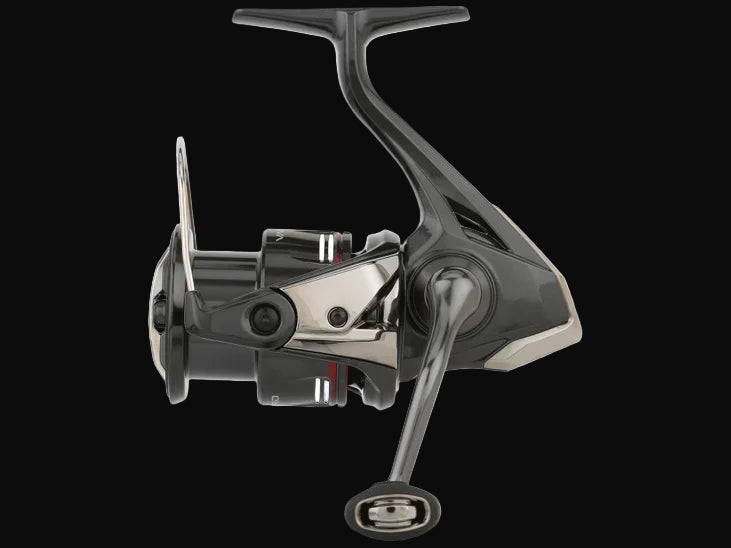
| Size to compare | A practical starting use | Check before choosing |
|---|---|---|
| 1000 / compact 2000 | A light, specialized setup for small presentations | Capacity for your actual line diameter and balance on the rod |
| 2500 | A versatile bass spinning setup for finesse rigs and small moving baits | Usable capacity, retrieve per turn and comfortable working weight |
| 3000 / compact 3000 | More capacity or a different retrieve within a suitable family | Whether capacity, spool design and weight actually differ from the 2500 |
Choose around the presentation first
A drop shot, a lightly weighted worm and a small soft jerkbait can all suit spinning tackle, but the finished rigs may cast and pull differently. Decide what you will cast most often and include the hook, sinker and plastic when checking the rod’s lure rating. The reel’s job is to manage an appropriate amount of line and retrieve it reliably; it does not increase the rod’s casting range.
For an open-water finesse setup, start with the line and rod you need to present the bait. If the same outfit must also steer fish away from heavier cover, reconsider the complete system rather than choosing a larger reel as the only adjustment. The Cashion bass-rod guide explains how power, action and complete lure weight work together.
2500 vs 3000: compare capacity, not just the number
Size labels help narrow a shelf of reels, but they are not a universal measurement across manufacturers or series. Read the exact model’s capacity chart and weight. Two neighboring sizes can be close in body weight while carrying different amounts of line, and a compact model designation deserves the same careful specification check as any other reel.
Shimano’s U.S. Vanford FA specifications provide a useful example. The 2500HGA is listed at 6.2 ounces with capacity for 140 yards of 8-pound mono, while the C3000XGA is 6.3 ounces with 170 yards of 8-pound mono. They also have different listed retrieves: 34 and 37 inches per crank. These are specifications for those exact models, not a rule that every 3000 has the same advantages over every 2500.
Read mono and braid capacity as different measurements
A capacity listing such as 8/140 means 140 yards of the stated 8-pound line type in that chart. It does not mean the spool will hold 140 yards of every line labeled 8-pound. Diameter varies among materials and products, so compare the manufacturer’s mono and braid columns with the line you intend to buy.
Think about usable capacity after repeated reties as well as a long cast. More capacity can provide a reserve, but filling an unnecessarily deep spool entirely with premium line adds cost. Follow the reel and line makers’ instructions for backing and filling the spool. A modest capacity that suits the actual line can be more practical than buying the largest spool available.
Retrieve per crank is more useful than gear ratio alone
Gear ratio describes how many times the rotor turns for one handle revolution. Line pickup also depends on the spool, so two reels with similar ratios can retrieve different lengths of line per turn. Compare inches per crank when judging how quickly you can recover slack after a cast or follow a fish moving toward you.
Fast pickup does not require you to work every lure quickly. You still control the cadence with your handle speed, rod movement and pauses. For a slowly worked drop shot, taking up slack efficiently can be useful even though the presentation itself remains restrained. Choose a retrieve you can control comfortably instead of treating the highest ratio as a performance ranking.
Balance and drag matter more than maximum drag bragging rights
Consider the reel mounted on the rod, with your hand in its normal fishing position. Overall weight is only one part of comfort. The way the combination feels while you hold the tip up, shake a rig or make repeated casts matters more than comparing reel weights in isolation. A very light reel is not automatically the most comfortable match for every rod.
Maximum drag is a ceiling, not a recommended fishing setting. Your leader, knots, hook wire and rod determine how much pressure the setup can use. Set and check the drag with the complete outfit, allowing it to yield before the weakest part is overloaded. A smooth release at a suitable setting is more useful with light line than a large maximum-drag number.
Choose straight line or braid with a leader deliberately
Straight nylon or fluorocarbon offers a simple connection from spool to lure, while braid with a leader separates the mainline from the material nearest the bait. Braid can make a manageable mainline on a spinning spool, but the leader connection becomes another knot to tie, inspect and pass through the guides. Choose the arrangement you can maintain consistently.
Before increasing the breaking strain of straight mono or fluorocarbon, check its diameter and handling on the intended spool. Thick, stiff line can be troublesome on a small spinning reel. Our bass-fishing line guide explains the tradeoffs, including where the lure’s depth and surface action should influence the choice.
Compare model families by what the extra cost gives you
The Daiwa Regal LT and Shimano Vanford FA are two families worth comparing within ACM’s spinning-reel selection. Start with a size that fits your line, then assess the weight, retrieve, handle feel and budget of that exact version. The series name alone does not tell you whether the available model is the right tool.
Spend more when a specific difference matters to how you fish, such as comfort through a day of repeated presentations. Avoid paying for capacity or a size you do not need simply to move up a range. Check the selected option on the product page before ordering, since the sizes offered and available can change independently within each family.
Set it up so the reel gets a fair test
Spool under even tension, use the maker’s recommended fill level and secure braid with suitable backing where required. An overfilled spool or loose coils can make an otherwise suitable reel appear to be the wrong size. After the first casts, check that line is laying evenly and that slack loops are not being wound back onto the spool.
Test the actual rig before buying a second reel to solve a casting problem. If the bait tumbles, the line twists or the rod will not load comfortably, inspect the rigging, line and lure rating first. A spinning outfit works best when those parts agree. For heavier casting presentations, compare the separate Shimano SLX casting-reel guide instead of forcing one spinning setup to handle every bass technique.
Browse spinning reels and compare the exact size and availability, then match it with a suitable rod and line. For a finesse presentation to build around, read the Sakamata Shad rigging guide. Return to Gear Guides for the complete library.
Manufacturer references: Shimano U.S. Vanford FA model specifications; Berkley spinning-reel spooling guidance