


Megabass Karashi 59 vs 80: Which Size Should You Fish?
The choice between a Karashi 59 and Karashi 80 starts with the size of the presentation and the tackle that can deliver it. Both are slow-sinking baits that can work around the surface and below it. The 59 offers a compact, light presentation; the 80 gives you a larger profile and substantially more casting weight. Pick the one that fits the job before deciding on a color.
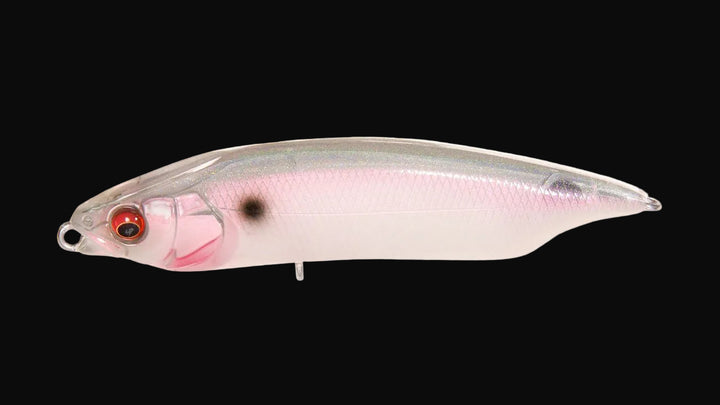
| Model | Length | Listed weight | Buoyancy | Listed hook size |
|---|---|---|---|---|
| Original Karashi, commonly called 59 | 59mm | 3/16 oz | Slow sinking | #10 |
| Karashi 80 | 80mm | 7/16 oz | Slow sinking | #6 |
What actually changes between the two sizes
The Karashi 59 and Karashi 80 differ in more than length. The 80 weighs more than twice as much as the original. That difference matters when loading a rod, setting up a reel and deciding how comfortably you can place the bait. A rod that feels appropriate with the 80 may barely load with the 59, making the smaller lure harder to cast accurately.
The specifications above describe the standard models listed by Megabass. They do not establish a fixed running depth or tell you how long to pause. Line, the amount of slack and the way you move the rod all influence the presentation. Treat the model name as the starting point, then observe the finished setup in the water.
When the Karashi 59 makes more sense
Choose the 59 when a small profile is a deliberate part of the approach. If the forage you can see is small, or a larger lure seems out of proportion to the fish you are targeting, the compact bait gives you a different option. That is a reason to try it, rather than a promise that downsizing will solve every difficult bite.
Its light weight also makes tackle selection important. Megabass recommends light spinning or bait-finesse equipment for the original Karashi. A conventional casting setup intended for much heavier lures can make a 3/16-ounce bait unnecessarily frustrating. Before buying another lure, check whether the rod and reel you plan to use can place this weight consistently.
When to step up to the Karashi 80
Choose the 80 when you want a more substantial baitfish profile or when its 7/16-ounce weight is a better match for your equipment. Its extra mass can make the casting task more manageable on a suitable setup, but greater weight does not automatically mean every cast will go farther. Rod loading, reel control, wind and the line you are using still matter.
Separate the question of size from the question of activity. A larger bait does not have to be worked aggressively, and a small bait does not have to be fished slowly. Start with the profile you want, then decide what movement fits the fish and water. That keeps you from changing both size and retrieve without knowing which adjustment made a difference.
Begin with a quiet, controlled retrieve
Megabass identifies a very slow, straight i-motion retrieve as one option for both models. Start close enough to see the bait and find a pace that produces a restrained movement you can repeat. Instead of adding constant rod action, pay attention to the track and the tension in the line. This gives you a useful baseline before experimenting with more energetic movements.
Think of the first few casts as a calibration. A different reel or a faster handle rhythm can change what the lure does even when the retrieve feels familiar. Once you establish a repeatable presentation, vary one thing at a time, such as the route beside cover or a small increase in speed. A consistent baseline makes a follow or a strike more informative.
Add twitching and surface action with a purpose
The manufacturer also describes subsurface twitching, surface walking and a faster bait-busting presentation. These are alternatives to test when a quiet straight retrieve is not the approach you want. Begin with short rod inputs and watch how far the bait travels. Increase the movement only when there is room and the resulting action suits the target.
Around a small pocket, control can be more useful than covering the maximum distance with each twitch. Across open water, you may have room for a more active presentation. Plan where the lure will finish its movement as well as where it starts. Both models carry exposed treble hooks, so a clean route beside cover is different from trying to pull the bait through material that will foul those hooks.
Slow sinking is different from suspending
Neither standard model should be treated as though it will remain suspended indefinitely when you stop. Before using a pause around shallow cover, watch how the bait settles on your line. A pause that works over open water may let the lure reach an obstruction along a shallower route. Adjust from what you can see rather than applying one fixed pause count everywhere.
This is also why a Karashi is a different buying decision from a conventional suspending jerkbait. If your main requirement is holding a bait at a particular depth during pauses, compare that requirement with the Vision 110 model guide. The useful question is which presentation you need, not which lure has the more familiar category label.
Match line, rod and hooks as one setup
For the original 59, Megabass gives 4-7 lb fluorocarbon as guidance when tying directly to the eye for twitching and walking action. That is model-specific guidance. It should not be copied automatically to the heavier 80, to a different hook arrangement or to a situation that demands another balance of line strength and control.
Use the rod’s lure rating to check casting suitability and consider how the rod and drag will protect the hooks during a fight. Extra rod power is not a substitute for a controlled drag setting. If the bait begins behaving differently after a line or hardware change, repeat the visible short-cast test. A seemingly minor change at the connection can affect a small lure’s freedom of movement.
Choose a color after settling the presentation
Begin with the forage, visibility and light conditions you actually face. A natural-looking finish can be a sensible reference in clear water, while a finish you can track more easily may help you judge the lure’s route. Use that as an organized starting choice rather than treating a color name as a universal answer.
If you carry both sizes, trying a comparable finish helps you evaluate the size change with fewer variables. If only one size suits your equipment and intended presentation, there is no requirement to buy both. Keep the model decision tied to the way you intend to fish it, then check the exact color selection before ordering.
Compare the current Karashi 59 options and Karashi 80 options, or browse the Megabass collection. For help matching the casting tool to either bait, read Choosing a Cashion Bass Rod by Technique. You can find the wider tackle library in Gear Guides.
Manufacturer references: Megabass original Karashi specifications and technique guidance · Megabass Karashi 80 specifications and presentations